
Hamstermind is a puzzle adventure from studio Righteous Tree that manages to grab attention almost instantly after boot-up. You step into the tiny boots of Professor Hamster Jones, a delightfully absurd rodent stand-in for an Indiana Jones–style adventurer. The concept is playful from the outset, and it sets the stage for a journey that, while lighthearted in tone, still manages to carry genuine puzzle-driven intrigue.
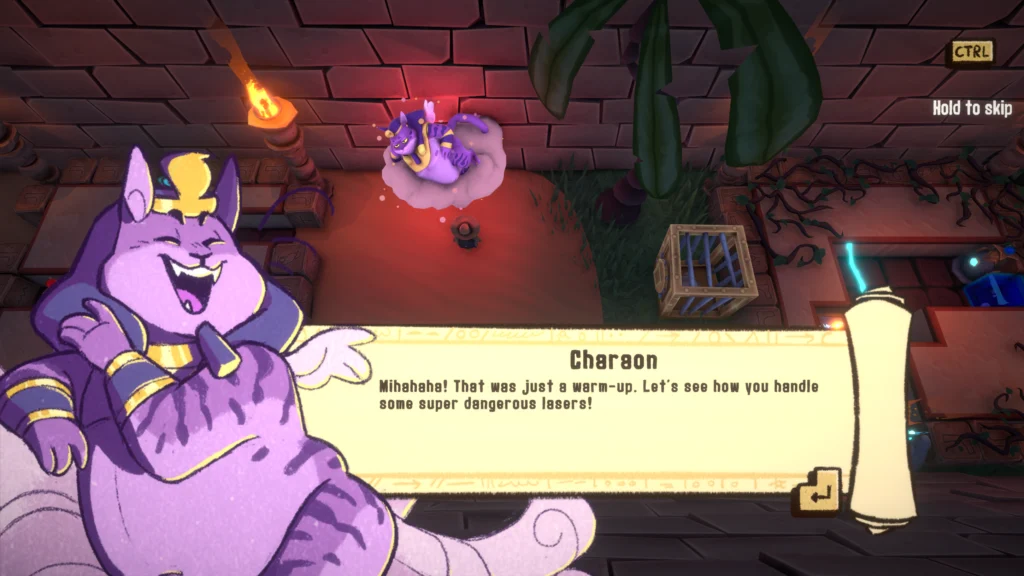
The story kicks off when Hamster Jones receives a mysterious package from a djinn-like feline figure named Charaon. In a curious twist, the opening cinematic delivers its challenge in French—the developer’s native language—adding a layer of charm and slight mystique to the presentation. The premise remains simple rather than elaborate, but it’s more than enough to push players toward the game’s central focus: unraveling the secrets hidden deep within a sprawling pyramid.
Almost immediately, players are dropped into that pyramid alongside a small cast of eccentric companions. Each character brings a different functional role to the experience. One standout is Chris Eratops, a calm, triceratops-like figure whose expertise lies in identifying structural weaknesses within the environment. These allies appear regularly at the central hub—situated at the pyramid’s summit—where the game periodically returns you for story progression and hints. Importantly, these narrative interludes never overstay their welcome, allowing puzzle-solving to remain the core focus for those who want to stay immersed in the challenges.
Visually, Hamstermind leans into a nostalgic aesthetic reminiscent of early 2000s console-era adventure games. Character dialogue is presented through expressive 2D illustrations, while their 3D counterparts inhabit the world simultaneously, creating a layered presentation style that gives every interaction a distinct sense of personality. The result is a world that feels both playful and slightly retro, enhancing the game’s whimsical tone.
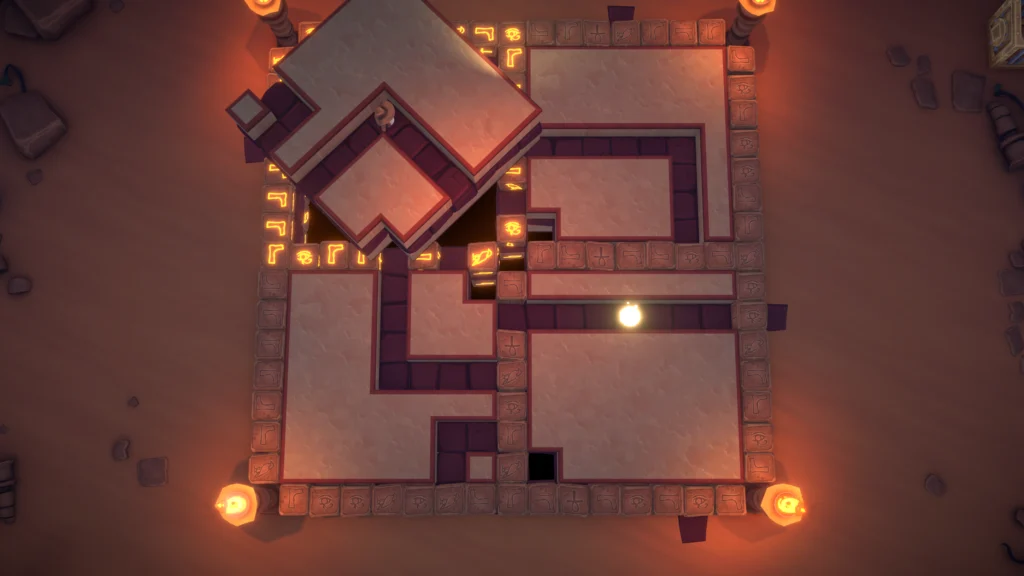
At the heart of the experience lies its puzzle design. Most rooms introduce at least one primary challenge, often accompanied by additional secrets or optional mysteries. The signature mechanic revolves around rotating massive tiled structures within each chamber to guide Hamster Jones toward a glowing orb that unlocks progression. Movement and spatial awareness are tightly intertwined, as positioning the character determines how these tiles shift and align. Solving each room becomes a matter of understanding not just the puzzle itself, but how your placement reshapes the environment around you.
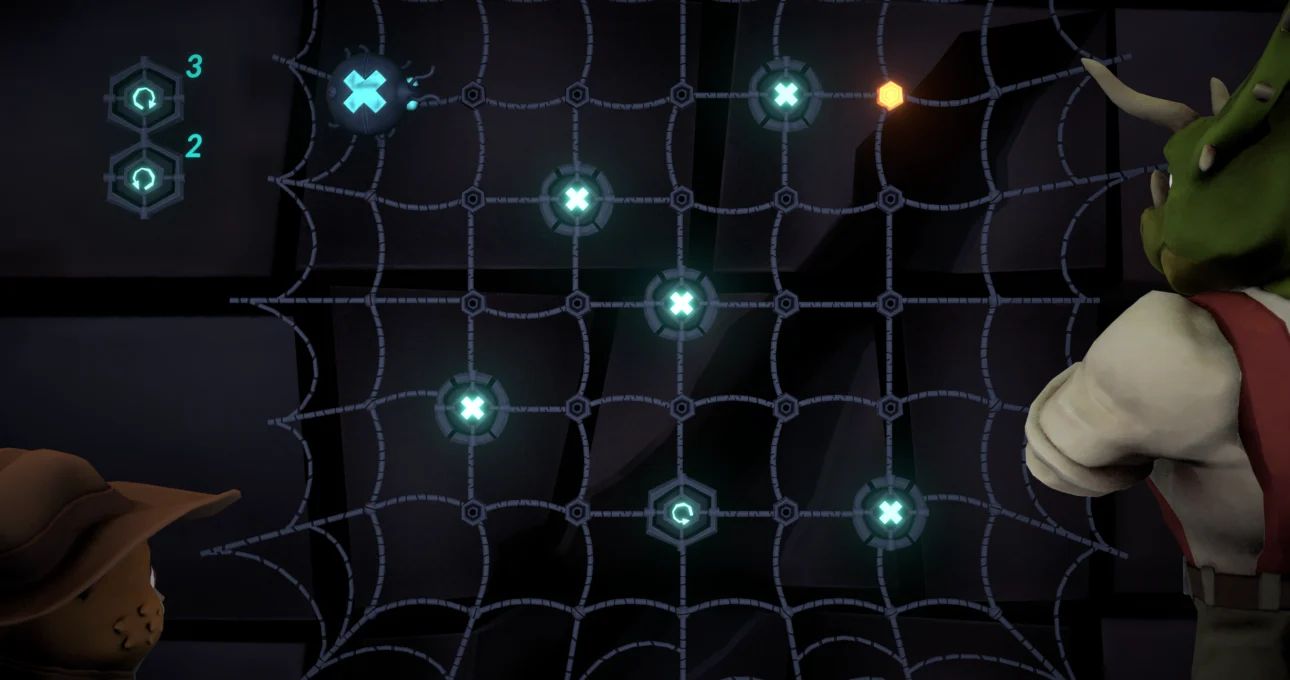
Beyond the core tile-based challenges, the game frequently introduces inventive variations to keep things fresh. One particularly memorable example involves directing an electronic scarab across a coordinate grid by placing directional nodes, effectively programming its path to activate multiple points in sequence. These alternate puzzle types reinforce the game’s central theme of pattern recognition while offering enough variation to prevent repetition. Alongside progression rewards such as cosmetic hats for Hamster Jones, there’s a steady sense of playful reward woven into the structure.
The early portion of the game flows smoothly, with puzzles striking a satisfying balance between challenge and accessibility. Progress feels brisk, and each solved room naturally feeds curiosity about what lies deeper within the pyramid. However, later sections introduce a noticeable spike in difficulty that disrupts this rhythm. While not necessarily a flaw in design, the sudden shift can break momentum, encouraging players to step away and return later with a fresh perspective.
That break in pacing introduces a more practical issue. Upon returning, players are placed back at the pyramid’s hub rather than their previous room, and with multiple branching paths available, retracing steps can become mildly frustrating. It creates a brief but noticeable interruption in flow, particularly when puzzle complexity is already higher than earlier sections.
The hint system also proves inconsistent at times. Some suggestions feel overly generic, occasionally restating mechanics that are already fundamental to the game’s design—such as the ability to move tiles, which is essentially the core concept of most puzzles. Whether intentional humor or oversight, it can sometimes add confusion rather than clarity during more difficult moments.
Despite these rough edges, completing Hamstermind remains a satisfying experience. The game delivers enough inventive puzzles, charming presentation, and light narrative intrigue to make the journey worthwhile. Even after the credits roll, additional post-game content offers further challenges that hint at deeper layers yet to be uncovered.
In the end, Hamstermind is a clever, characterful puzzle adventure that occasionally stumbles in pacing and guidance, but consistently shines in creativity and charm. It’s the kind of game that invites curiosity at every turn—and rewards those willing to think a little differently inside its shifting pyramid walls.