
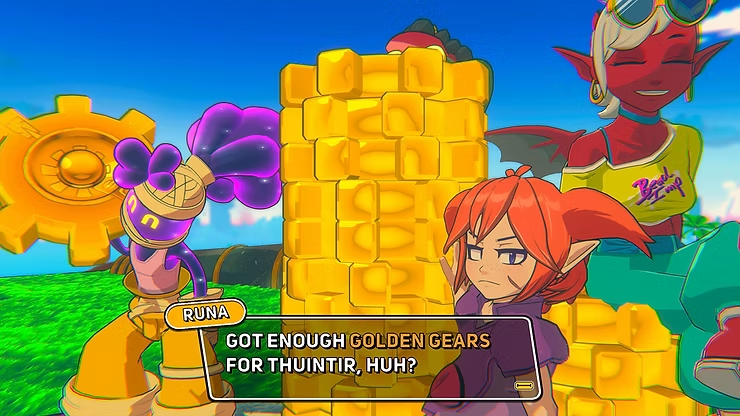
I’m only a few hours into Demon Tides, Fabraz’s open-world platformer follow-up to 2021’s Demon Turf, but it already feels like the start of something vast and unpredictable. Once again, we follow Beebz—the thousand-year-old young demon—on her journey across the sprawling ocean world of Ragnar’s Rock, chasing not just collectibles or objectives, but a sense of identity and self-discovery.
One thing that immediately stands out is how confidently Fabraz continues to craft visually striking worlds. Fabraz leans hard into vibrancy here, and it pays off. The ocean sparkles with inviting blues that almost beg you to dive in, while islands burst with personality, color, and motion. Unlockable cosmetics add flair to Beebz’s design, and the ability to mix and design graffiti-style artwork for other players turns the world into a shared creative canvas. It’s the kind of visual energy that keeps your eyes constantly engaged, even during quieter moments.
But the real strength of Demon Tides lies in its movement and level design. Each island functions like a self-contained platforming playground, reminiscent of Super Mario Galaxy or Super Mario Odyssey. Beebz can transform into different demon forms, each offering unique traversal abilities that open up new ways to approach challenges. Every landmass is packed with “gears” to collect through races, NPC quests, and environmental puzzles, but how you reach them is entirely up to you.
That freedom is where the game shines brightest. A single objective can be tackled in multiple ways depending on how you combine movement skills. Reaching a high pickup might involve scaling nearby structures before chaining a dash and glide across the gap, or alternatively using wall jumps and mid-air recovery to climb directly. It creates a sense of playful experimentation where solutions feel personal rather than prescribed, and it’s clear that the system only expands further as more abilities unlock.
The cast of characters also adds a surprising amount of charm. Beebz’s companions are full of personality, and conversations with them often lean into humor and lighthearted mischief. Even minor NPCs scattered across the islands feel expressive, offering small quests that reinforce the game’s playful tone. The overall vibe strongly evokes the energy of Saturday morning cartoons—bright, eccentric, and full of character-driven whimsy.
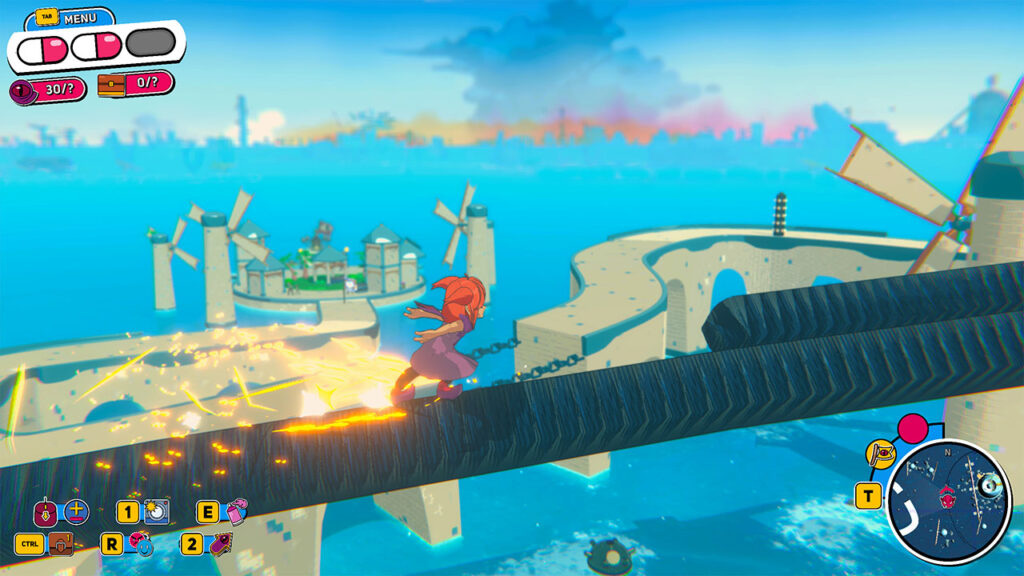
However, the experience isn’t without friction. The open-world traversal between islands can feel uneven at times. While occasional speed boosts or floating collectibles break up the journey, much of the travel space feels sparse, leaving stretches of ocean that don’t offer much interaction. The fog-of-war system, which encourages full map exploration, also adds to this sense of emptiness. In some moments, it feels like a more direct path between islands—or even removing fog entirely—might better support the pacing.
Even so, what’s already here feels promising. Demon Tides is shaping up to be a playground for platforming creativity, where player choice drives nearly every interaction. Between its expressive visuals, flexible movement systems, and lively character writing, it already feels like a strong contender for standout platforming experiences in 2026.
I’ve only just begun exploring its world, but it’s clear that Demon Tides is built around freedom, experimentation, and charm—and I’m eager to see how deep that ocean of possibilities goes.