
Survival games have always been difficult to pin down. Many of them ask players to “survive,” of course—but what that actually means can shift wildly. Is it about scavenging food so you don’t starve? Crafting shelter before night falls? Fighting off hostile threats? Or is it something else entirely, something more abstract at the core?
According to Seth Rosen, game director and lead designer at Ironwood Studios for Pacific Drive, the answer is far simpler than it seems.
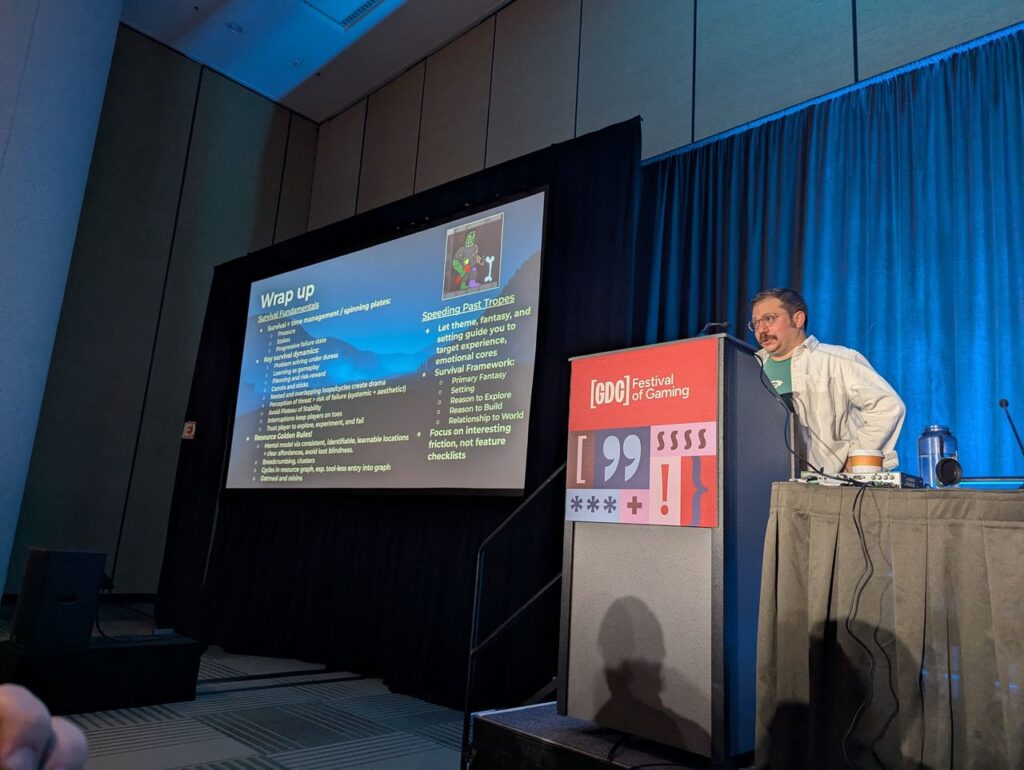
“Fundamentally, survival games are time management games,” he explained during his GDC Festival of Gaming 2026 talk, titled Pacific Drive Under the Hood: Survival Fundamentals, Systems Design, and Speeding Past Tropes.
Rosen brings real experience to the discussion. Before joining Ironwood Studios, he worked at Klei Entertainment on the Don’t Starve series. Interestingly, he admits he wasn’t initially drawn to the genre at all. In fact, he’s openly critical of parts of it, arguing that the market is often filled with games that feel busy but ultimately “lack richness.” Too many, he suggests, hand players an endless stream of tasks without a meaningful goal, fantasy, or cohesive world to anchor them.
For Rosen, this isn’t a failure of survival games themselves—but a misunderstanding of what actually makes them work.
To build survival crafting experiences that feel meaningful instead of mechanical, he argues designers should focus on one core pillar: time management.
“The moment-to-moment gameplay—gathering materials, crafting, managing meters—that’s not the point. That’s smoke and mirrors,” Rosen said. “They’re just differently patterned plates to spin as you move through the game world. Time is the only real resource.”
Time management? Or plate management?
Rosen expands the idea using a metaphor familiar to anyone who has played the genre: survival games are about spinning plates. Each “plate” represents a loop or system the player must constantly maintain—problems appearing, being handled, and then replaced by new ones.
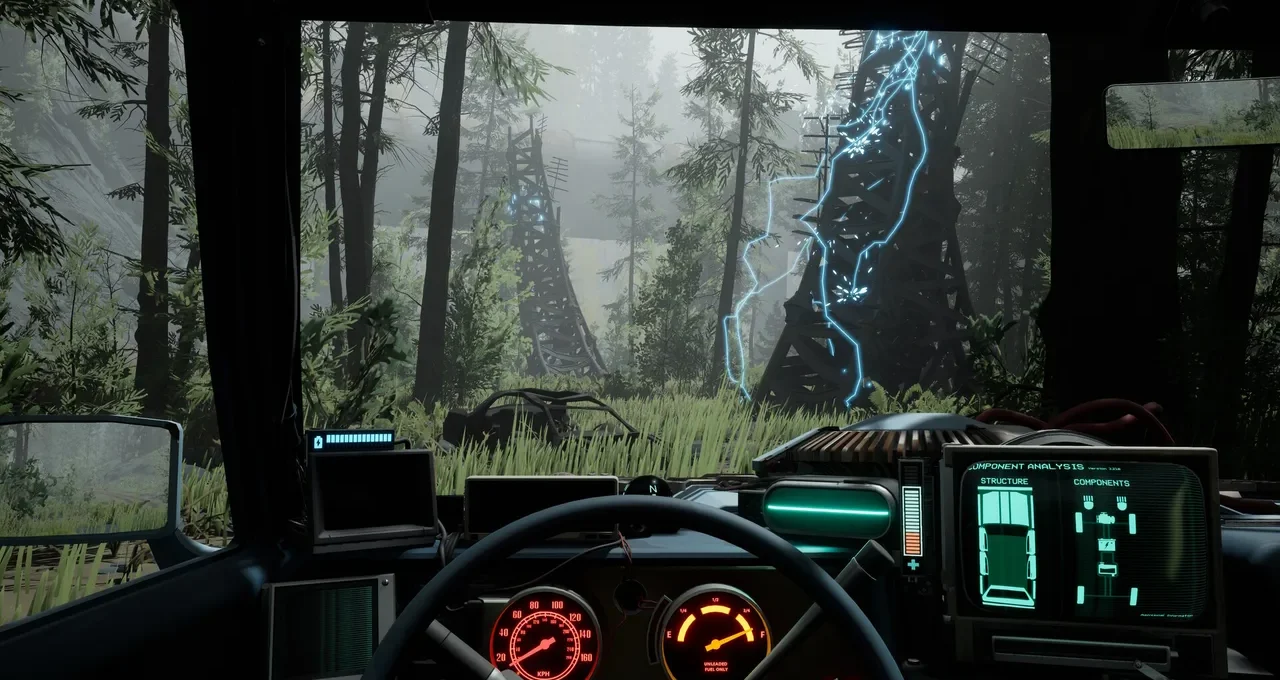
In Pacific Drive, for example, the structure becomes especially clear. The player is tasked with escaping the Olympic Exclusion Zone, a quarantined stretch of the Pacific Northwest filled with dangerous anomalies. The only tool at their disposal is an aging station wagon that gradually becomes both lifeline and liability.
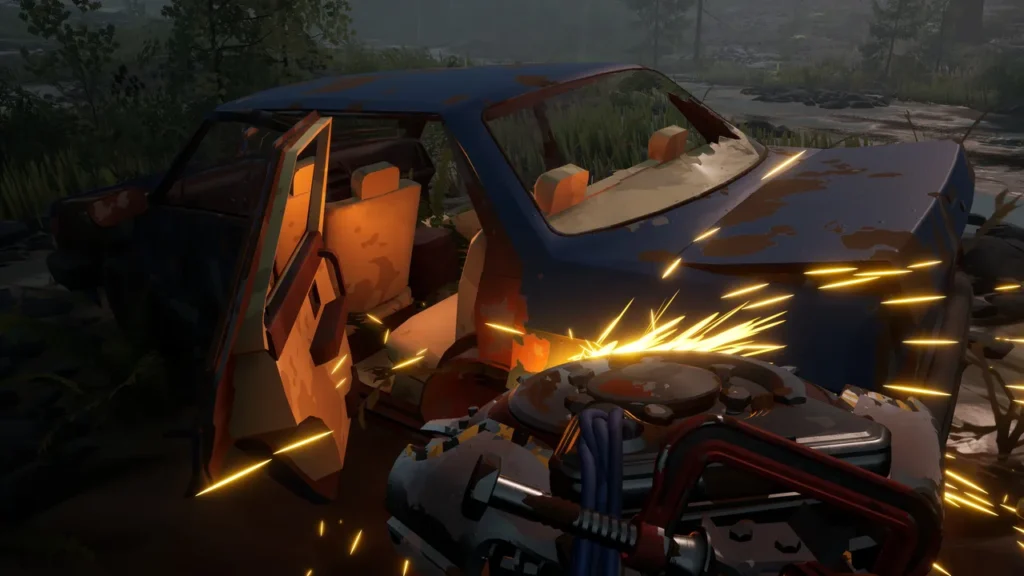
To progress, you’re constantly managing the car’s condition across 27 different parts, gathering materials for repairs, upgrading your garage, and ensuring fuel and power supplies stay stable during runs. On top of that, unpredictable anomalies and “quirks” continuously disrupt plans, forcing rapid adjustments mid-journey.
This is where Rosen’s “plates” start to collide.
Imagine setting out to gather resources for a key upgrade, only for a Bolt Bunny anomaly to latch onto your car, draining its battery at an alarming rate. Suddenly, your carefully planned route collapses. You’re no longer optimizing—you’re improvising, searching for power, rerouting toward an exit, and rethinking every decision in real time.
For Rosen, this constant overlap of systems creates the genre’s emotional core. It’s not about the individual mechanics in isolation, but the pressure they generate together.
“Numerous plates create pressure through competing demands on the player’s time,” he said. “Even when cycles are slow or small, their variety and timing create friction that forces constant re-evaluation.”
That friction leads to what he identifies as the survival loop’s defining emotional structure: pressure, stakes, and failure. You are pushed into difficult situations, forced to make imperfect decisions, and sometimes you lose—but those failures feed back into learning, making future runs more meaningful.
“These are games about problem-solving under duress,” Rosen explained. “You get into trouble, often by your own actions, and then you work your way out. That’s where the drama comes from.”
Each setback becomes a story. Each recovery becomes a small victory. And over time, those moments stack into something personal—emergent narratives shaped entirely by the player’s decisions under stress.
Make sure the plates add up to something meaningful
Ultimately, Rosen’s argument returns to a design philosophy: survival games work best when their systems are not just numerous, but purposeful. The mechanics, the crafting, the meters—they all need to support a clear fantasy or emotional goal rather than existing as disconnected chores.
As the genre continues to grow—spanning everything from traditional survival experiences to lighter “friendslop” titles like Palworld and Satisfactory, as well as sandbox staples like Minecraft—that clarity becomes even more important.
Some of the most successful survival games today, Rosen notes, are not necessarily the most complex, but the ones that best align systems with setting, tone, and player fantasy. Whether intense and punishing or relaxed and creative, the key is coherence.
In the end, survival design isn’t just about resource bars or crafting trees. It’s about time—how it pressures the player, how it shapes decisions, and how it turns chaos into stories worth remembering.